

Introduction
India is racing toward electrification, but there’s a quiet bottleneck nobody talks about: the grid itself. Substation upgrades take 12-18 months. Rural highways have no three-phase supply. Bus depots are hitting capacity ceilings. Fleet operators with ambitious EV targets are discovering that buying electric vehicles is the easy part — keeping them charged, reliably and at scale, is where the real challenge begins.
Off-grid EV charging is emerging as the answer. By generating power on-site from renewable sources, fleets can deploy fast chargers anywhere — from remote mining sites to city bus depots — without waiting for the grid to catch up.
In this guide, we’ll break down exactly how off-grid EV charging works, why it’s becoming essential for Indian fleets, and how Trinity Cleantech’s Rapid Charger 150 is redefining what’s possible when you stop depending on the grid.
What Is Off-Grid EV Charging?
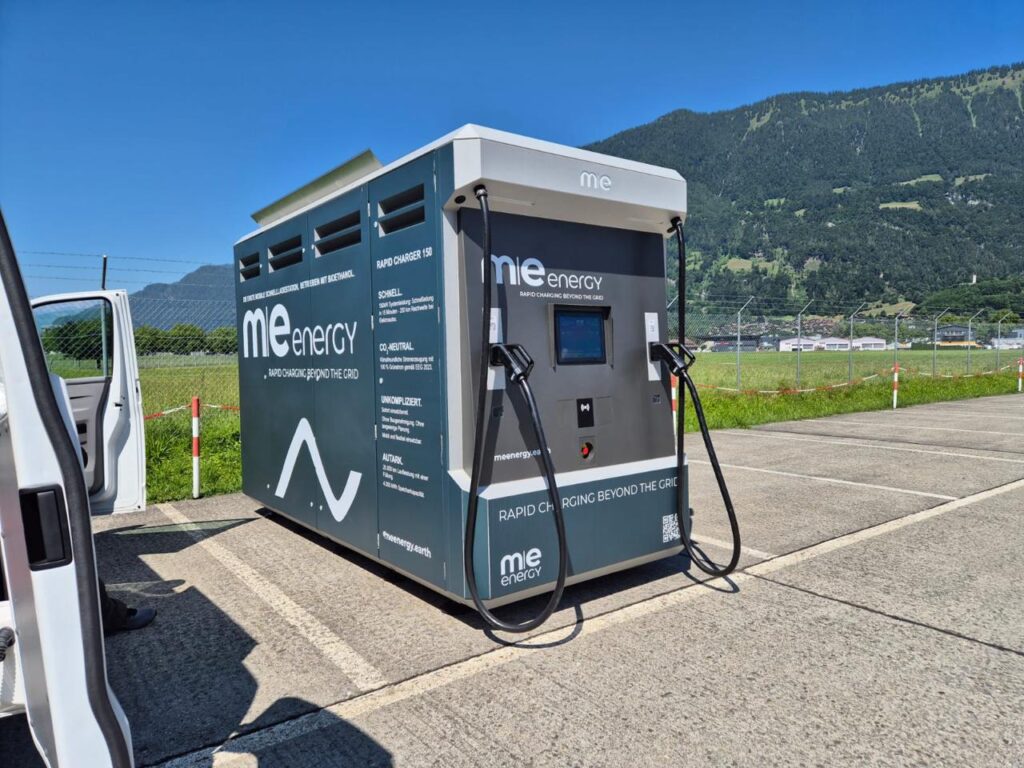
Off-grid EV charging refers to charging infrastructure that operates independently of the electricity grid. Instead of drawing power from a utility connection, these systems generate and store their own energy on-site using renewable sources such as solar, bioethanol, hydrogen, or hybrid configurations.
The core promise is simple: plug in and charge — anywhere, anytime — without ever asking whether the grid is available.
A typical off-grid EV charging system includes:
- An on-site energy source (solar PV array, bioethanol generator, or similar)
- Battery energy storage to buffer supply and ensure 24/7 availability
- Power conversion electronics (inverters, controllers, DC fast-charging modules)
- A smart charging interface with user controls, session data, and remote monitoring
Together, these components create a self-contained charging ecosystem that’s immune to grid outages, independent of utility upgrades, and deployable in weeks rather than months.
Why Off-Grid Charging Matters Right Now
1. Grid infrastructure can’t keep up with EV demand
India added over 1.9 million EVs to its roads in 2024 alone. But the grid wasn’t designed for the load profile of commercial fast charging. DISCOMs are struggling to sanction new high-capacity connections, and substation upgrades routinely take over a year. Fleet operators who need charging capacity now can’t afford to wait.
2. The most promising EV corridors have the weakest grids
Highway charging, mining fleets, bus depots in peri-urban areas, port logistics, emergency services — these are exactly the locations where grid capacity is thin. Off-grid systems unlock EV adoption in the geographies that need it most.
3. Sustainability claims demand clean inputs
Pulling power from a coal-heavy grid undermines the environmental case for EVs. On-site renewable generation — whether solar or bioethanol — delivers genuine well-to-wheel emissions reductions that win tenders and satisfy ESG mandates.
4. Grid-tariff volatility is crushing unit economics
Commercial electricity tariffs, demand charges, and time-of-use penalties can destroy the business case for EV charging hubs. Off-grid systems lock in predictable energy costs for the life of the asset.
The Two Dominant Off-Grid Approaches — And Why Bioethanol Is Winning for Fast Charging
Most off-grid EV charging conversations start with solar. It makes sense: sunlight is abundant, and solar costs have collapsed. But when you dig into the engineering realities of fast charging — the 150 kW+ DC output that commercial fleets actually need — solar-only systems run into hard limits.
Solar + Battery Storage
How it works: Rooftop or ground-mounted PV panels charge a stationary battery bank, which then feeds a DC fast charger.
Strengths: Zero fuel cost, clean, mature technology.
Limitations: Requires large land footprints (a 150 kW charger needs roughly 600-800 m² of panels plus battery space), depends on weather and seasonal irradiance, and struggles to maintain output during monsoon or extended cloudy periods. Capex is front-loaded and payback extends 6-8 years.
Bioethanol-Powered Fast Charging
How it works: An onboard generator converts renewable bioethanol into electricity, which charges an integrated battery that delivers continuous DC fast-charging output.
Strengths: Compact footprint (no land-hungry panel arrays), 24/7 availability regardless of weather, near-instant deployment, and a circular fuel economy sourced from Indian agricultural byproducts.
Limitations: Requires periodic bioethanol resupply — though a single supply delivers up to 20,000 km of fleet range.
For high-utilization commercial applications — bus depots, logistics hubs, highway corridors — bioethanol chargers deliver the consistency and throughput that solar-only systems cannot.
Introducing the Trinity Rapid Charger 150
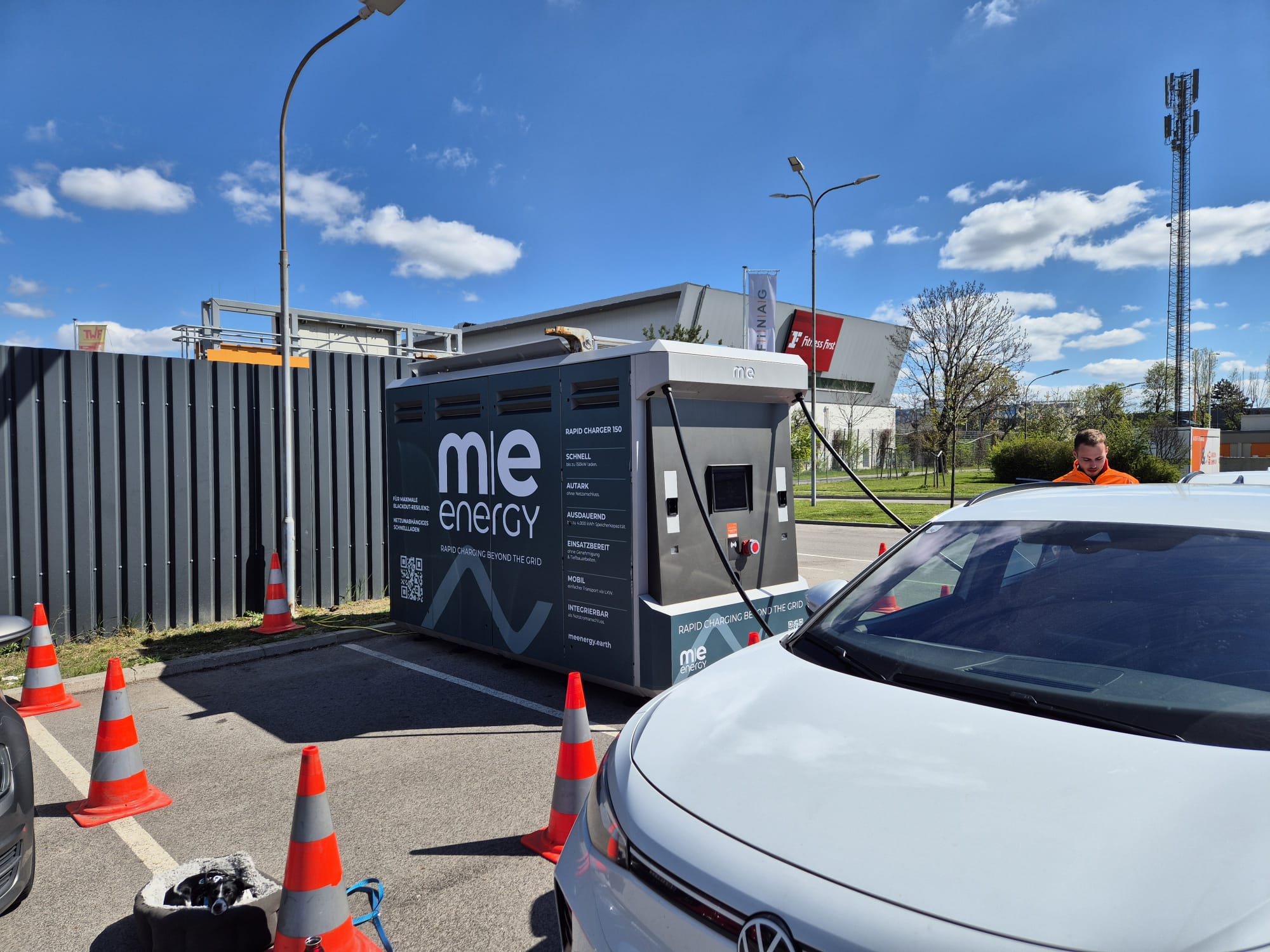
Trinity Cleantech’s Rapid Charger 150 is a 150 kW DC fast charger purpose-built for off-grid commercial operations in India. Manufactured at our Jadcherla facility following our acquisition of me Energy’s technology, it’s the first bioethanol-powered fast charger engineered specifically for Indian fleet conditions.
The headline specs
| Specification | Value |
|---|---|
| Peak charging output | 150 kW |
| Onboard energy storage | 4 MWh |
| Range delivered | 250 km in 15 minutes |
| Range per bioethanol supply | Up to 20,000 km |
| Grid connection required | None |
| Civil works required | Minimal |
| User interface | 15-inch touchscreen |
| Fuel source | Renewable bioethanol |
How it delivers power — the three-stage process
Stage 1: Bioethanol input. Renewable bioethanol — a fuel derived from Indian agricultural feedstock — is loaded into the onboard conversion system. No diesel, no grid, no compromise.
Stage 2: On-site electricity generation. The integrated generator converts bioethanol into electrical energy, producing up to 150 kW of power while simultaneously charging the 4 MWh onboard battery for continuous availability.
Stage 3: Rapid EV charging. Electric vehicles — cars, buses, trucks, commercial fleets — plug in and receive 250 km of range in just 15 minutes, day or night, with zero grid dependency.
Where the Rapid Charger 150 Makes the Biggest Difference
🚌 Bus depots requiring 24/7 uptime
Electric bus operators can’t afford downtime. The Rapid Charger 150 ensures fleets return to service on schedule, even during grid outages or peak demand hours when utility power gets throttled.
🛣️ Highway corridors & remote routes
Deploy fast charging on routes where the grid doesn’t reach — opening entirely new geographies to electric logistics and intercity mobility.
🏭 Fleet depots & logistics hubs
Skip the 12-18 month substation upgrade queue. Install the Rapid Charger 150 and start charging within weeks of order.
🚨 Emergency & backup infrastructure
During natural disasters, grid failures, or critical operations, the Rapid Charger 150 becomes a resilient lifeline for essential electric mobility.
🏗️ Mining, construction & industrial sites
Off-grid industrial operations finally have a path to electrifying their vehicle fleets without building out utility infrastructure.
Five Strategic Advantages You Can’t Get from Grid-Tied Chargers
- Flexible deployment — No permits, no DISCOM approvals, no substation queues. Pick a site, prepare a pad, install.
- Predictable economics — Your energy cost is your bioethanol cost. No demand charges, no time-of-use penalties, no tariff hikes.
- Genuine sustainability — Renewable bioethanol from Indian agricultural sources delivers verifiable carbon reductions for ESG reporting.
- Blackout-proof operations — When the grid goes down, your fleet keeps moving. Critical for emergency services, healthcare logistics, and mission-critical transport.
- Future-proof asset — As bioethanol supply chains mature across India, operating costs continue to decline over the 15-20 year service life.
Common Mistakes to Avoid When Planning Off-Grid EV Charging
Based on deployments we’ve supported across India, here are the pitfalls we see most often:
- Underestimating utilization. If you plan to charge 3 buses a day, solar might work. If you plan to charge 30, you need bioethanol.
- Ignoring fuel logistics. Map your supply chain before committing — Trinity helps customers plan this as part of every deployment.
- Skipping remote monitoring. Off-grid assets in remote locations need telematics. Ensure your charger has connectivity built in.
- Over-engineering Day 1. Start with one unit, validate economics, then scale. The Rapid Charger 150’s modular design makes this easy.
- Treating it like a grid charger. Off-grid assets need different maintenance rhythms. Partner with a manufacturer (not just an installer) who can support long-term operations.
Frequently Asked Questions
Q1. Is bioethanol-powered charging genuinely cleaner than grid charging? Yes. India’s grid still derives a significant share of its power from coal. Renewable bioethanol from agricultural feedstock delivers substantially lower lifecycle emissions, and the carbon footprint improves further as bioethanol supply chains scale.
Q2. How long does it take to deploy a Rapid Charger 150? Typically 4-8 weeks from order, compared to 12-18 months for a comparable grid-connected fast charger requiring a substation upgrade. No civil electrical works required.
Q3. Can it charge any electric vehicle? Yes. The Rapid Charger 150 is a DC fast charger compatible with cars, buses, and commercial trucks. Contact our team for specific connector type and vehicle compatibility for your fleet.
Q4. What’s the total cost of ownership versus a grid charger? Over a 10-year horizon, off-grid bioethanol charging typically matches or beats grid charging when you factor in grid-connection fees, demand charges, tariff escalation, and downtime costs — especially at high utilization rates.
Q5. Can I start with one unit and scale up later? Absolutely. Most Trinity customers begin with a pilot deployment, validate economics over 3-6 months, and then scale. Our manufacturing facility in Jadcherla can support fleet-wide rollouts.
Q6. Does Trinity provide ongoing service and bioethanol supply? Yes. Trinity offers comprehensive post-deployment support, including service contracts, bioethanol supply coordination, and remote performance monitoring.
The Bottom Line
The grid is a constraint. Off-grid EV charging is a liberation.
For fleet operators, bus depot managers, highway developers, and industrial sites across India, the Rapid Charger 150 represents the fastest, cleanest, most reliable path to electrification — without waiting for infrastructure that may take years to arrive.
If you’re building an EV operation that needs to run 24/7, at scale, on your timeline rather than the grid’s — it’s time to talk.
Ready to Deploy Off-Grid Fast Charging for Your Fleet?
Trinity Cleantech delivers end-to-end off-grid EV charging solutions — from feasibility assessment to deployment to ongoing service. Whether you’re piloting a single unit or planning a multi-site rollout, our team will design a solution that matches your operational needs.
Get a customized proposal for your fleet.
📞 +91 80192 38877 ✉️ marketing@trinitycleantech.com 📍 Secunderabad, Telangana | Manufacturing: Jadcherla, Telangana
