

The Grid Problem Fleet Operators Don’t Talk About
Open with the specific frustration: a fleet operator in Nagpur, Vizag, or a highway logistics hub has committed to EVs. The vehicles are ready. But the DISCOM says 3–18 months for a new transformer or HT connection. Grid-connected DC fast charging requires 100–500 kW capacity, often needing new substation infrastructure. The project stalls.
State the article’s promise: explain when off-grid EV charging makes economic sense, what technology exists in India right now, and how to evaluate total cost of ownership vs grid-connected alternatives.
Why Grid-Connected Fleet Charging Fails in Certain Locations (300 words)
- Grid availability gaps: India has 29,000+ public EV charging points but rural and peri-urban highway stretches remain uncovered. NHAI’s highway charging corridor rollout is in early stages.
- Connection lead times: New HT/33 kV connections from DISCOMs in AP and Telangana take 3–18 months. For a depot needing 500 kW+, this is project-blocking.
- Demand charges: Grid tariff for EV charging in Telangana is ₹6/kWh. Add demand charges triggered when multiple vehicles charge simultaneously — electricity bills can eliminate fuel savings.
- Infrastructure capex: Grid transformer upgrade + HT panel + civil works = ₹15–50 lakh before a single charger is operational.
- Reliability: Grid outages disrupt fleet schedules. A 2-hour outage during overnight charging = vehicles that can’t run the next morning.
Which Fleet Types Are Most Affected?
- Electric bus operators (TSRTC, private operators in Tier 2 cities)
- Last-mile logistics (e-commerce fulfillment, cold chain)
- Highway pit-stop charging investors (dhabas, highway plazas)
- Agricultural/mining fleet operators in remote districts
- Port logistics and shipyard EVs
H2: What Is Off-Grid EV Charging? (200 words)
Define clearly: a charging system that generates or stores its own energy without relying on a utility grid connection. Three main technologies:
- Solar + battery storage — good for daytime, poor for overnight fleet charging, weather-dependent
- Hydrogen fuel cell — high capex, limited fuel supply chain in India currently
- Bioethanol generator + battery buffer — available now in India, 24/7 availability, predictable fuel sourcing
Transition: “In India, the only commercially deployed solution at 150 kW fast-charging capacity is the me Energy Rapid Charger 150.”
How the me Energy Rapid Charger 150 Works
- Bioethanol fuel input: Vehicle-grade bioethanol (available from Indian sugar mills and ethanol blending program suppliers) is loaded into the onboard tank
- Onboard generator converts ethanol to electricity: High-efficiency generator produces AC power; no combustion engine — uses reforming + fuel cell process
- 4 MWh integrated battery buffer stores and conditions power: Ensures consistent DC output regardless of generator load fluctuations
- 150 kW DC fast charging output: CCS2 compatible; delivers 250 km of range in 15 minutes per vehicle
- One fill delivers up to 20,000 km of fleet range: A single bioethanol tank fuels an entire depot’s weekly operation
| Spec | Value |
|---|---|
| Output power | 150 kW DC |
| Charging protocol | CCS2 |
| Onboard storage | 4 MWh |
| Range per charge | 250 km in 15 min |
| Fuel type | Bioethanol (BE20–BE100) |
| Footprint | Compact, containerised |
| Grid dependency | None |
| Operating temp | 0°C – 50°C |
Off-Grid vs Grid-Connected — Which Is Right for Your Fleet?
| Factor | Grid-Connected | Off-Grid (Bioethanol) |
|---|---|---|
| Upfront infra cost | ₹15–50L (transformer, HT panel, civil) | Zero grid infra cost |
| Connection timeline | 3–18 months (DISCOM) | Days to deploy |
| Energy cost | ₹6–8/kWh (Telangana tariff + demand charges) | Predictable bioethanol cost |
| Availability | Grid uptime dependent | 24/7, weather-independent |
| Scalability | Limited by sanctioned load | Add units independently |
| Best for | High-density urban depots with reliable grid | Remote depots, highways, new locations |
| Carbon footprint | Depends on grid mix | Near-zero (BE20-BE100 is renewable) |
Use case decision framework:
- Choose grid-connected if: You’re in a city with reliable grid, sanctioned load is already adequate, and you’re charging 20+ vehicles overnight
- Choose off-grid if: Your location has no/thin grid, you need deployment in under 30 days, you’re on a highway corridor, or you need 24/7 uptime guarantees
Total Cost of Ownership — A Fleet Operator’s Calculation
- Scenario: 10-bus electric fleet, depot in Nalgonda district, Telangana. Each bus does 200 km/day. Grid connection not available for 12 months.
- Grid-connected option: ₹25L equipment + ₹20L grid infra + 12-month delay = operations begin month 13. Energy cost at ₹7/kWh avg: ₹X/month.
- Off-grid Rapid Charger 150 option: Equipment deployed in 2 weeks. Bioethanol at current Indian blending programme pricing. Zero demand charges.
- Break-even: Off-grid total cost of ownership competitive over 5-year horizon; superior when grid capex and downtime costs are included.
- Note: Contact Trinity for a site-specific TCO model — they provide this free for fleet operators.
Real-World Applications — Who Is Using Off-Grid Charging in India?
- Electric bus corridors: State transport undertakings deploying on routes connecting Tier 2 cities where DISCOM connections are pending
- Highway charging investors: Entrepreneurs leasing space at dhabas and highway plazas on NH44, NH65, NH16 corridors — deploying before NHAI’s formal charging network reaches them
- Logistics last-mile hubs: E-commerce fulfillment centres in peri-urban zones of Hyderabad, Vizag, Coimbatore
- Agricultural fleet operators: Tractors and farm equipment EVs in sugarcane-producing districts where bioethanol is locally sourced
- Emergency and defence fleet: Applications requiring grid-independent charging with no single point of failure
Trinity’s off-grid chargers deployed across 18+ states. Manufacturing and support from Jadcherla, Telangana.
How to Deploy an Off-Grid Charging Solution for Your Fleet
- Fleet audit — number of vehicles, daily range, charging window, location
- Site assessment — Trinity’s engineering team visits or conducts remote assessment
- Configuration — single unit or multi-unit array, bioethanol storage, access logistics
- Installation — containerised unit, no civil works, deployed in days
- Fuel supply setup — connect with regional bioethanol suppliers (list of sources)
- Training and commissioning — Trinity’s team trains depot staff
- Ongoing support — remote monitoring, maintenance SLA
Frequently Asked Questions
Is bioethanol available in India for EV chargers?
Yes. Bioethanol is commercially available across India under the Government of India’s National Biofuel Policy and the Ethanol Blended Petrol (EBP) Programme. India currently mandates 20% ethanol blending in petrol by 2025, which has significantly expanded domestic ethanol production — primarily from sugarcane molasses and food grain surplus. Bioethanol can be procured through licensed fuel distributors, sugar mills, and government-approved suppliers in Telangana, Andhra Pradesh, Maharashtra, and other major agricultural states. For fleet operators, bulk bioethanol supply contracts can be arranged directly with state-licensed ethanol producers, making it a viable, scalable fuel source for the me Energy Rapid Charger 150.
What is the refuelling frequency for the me Energy Rapid Charger 150?
The me Energy Rapid Charger 150 has an onboard energy storage capacity of 4 MWh and can deliver up to 20,000 km of fleet range per bioethanol supply. For a typical fleet depot running 10–15 electric vehicles daily, a single bioethanol refuel covers several days of continuous operation. Actual refuelling frequency depends on fleet size, vehicle type, and daily mileage — but a standard depot deployment typically requires refuelling every 3–7 days. The charger operates 24/7, so operators can plan refuelling during scheduled maintenance windows without any charging downtime.
Can the off-grid charger work alongside a grid connection as a backup?
Yes. The me Energy Rapid Charger 150 is designed to operate fully off-grid with no grid dependency, but it can also be deployed at sites with partial or intermittent grid access. In a hybrid configuration, the bioethanol generator acts as a primary or backup power source when the grid is unavailable — ensuring 24/7 uptime even during grid outages, load shedding, or peak demand periods. This makes it ideal for highway charging stations and industrial depots in Telangana and Andhra Pradesh where grid reliability is inconsistent.
What vehicles is the Rapid Charger 150 compatible with?
The me Energy Rapid Charger 150 is compatible with all DC fast-charge capable electric vehicles, including electric cars, electric buses, electric trucks, and commercial fleet vehicles. It supports standard CCS2 and CHAdeMO charging protocols used by most EV manufacturers operating in India — covering passenger EVs, light commercial vehicles, heavy-duty electric buses, and electric logistics fleet trucks. With 150 kW peak output, it can deliver up to 250 km of range in just 15 minutes, making it particularly suited for high-utilisation fleet and highway applications.
How does bioethanol EV charging compare to diesel generator-based charging?
| Factor | Bioethanol (me Energy RC150) | Diesel Generator |
|---|---|---|
| Emissions | Near-zero tailpipe CO₂ (carbon-neutral cycle) | High CO₂ + NOx + particulates |
| Fuel cost | Comparable to diesel; stable via long-term supply contracts | Volatile — linked to crude oil prices |
| Noise | Low — clean combustion, quieter operation | High — disruptive at depots and public sites |
| Regulatory risk | Aligned with India’s green energy mandates | Increasing restrictions on diesel use in urban zones |
| Charging speed | 150 kW DC fast charge | Typically limited to 60–100 kW AC slow charge via DG |
| Uptime | 24/7, automated | Requires manual refuelling and maintenance |
| Grid independence | Full | Full |
Bioethanol charging eliminates the carbon, noise, and regulatory liabilities of diesel while delivering faster, cleaner charging at comparable operating costs.
What is the CO₂ footprint of bioethanol-powered EV charging?
Bioethanol is a carbon-neutral fuel when produced from renewable feedstocks such as sugarcane or food-grain surplus. During combustion, bioethanol releases only the CO₂ that was absorbed by the crop during growth — resulting in a net lifecycle carbon footprint of approximately 20–40 gCO₂/km for EV charging, compared to 150–200 gCO₂/km for diesel generator-based charging and 80–120 gCO₂/km for coal-heavy grid electricity in India. When sourced from certified Indian ethanol suppliers under the EBP programme, the me Energy Rapid Charger 150 can achieve up to 80% lower lifecycle emissions than diesel-based charging alternatives.
Can the charger be moved between depot locations?
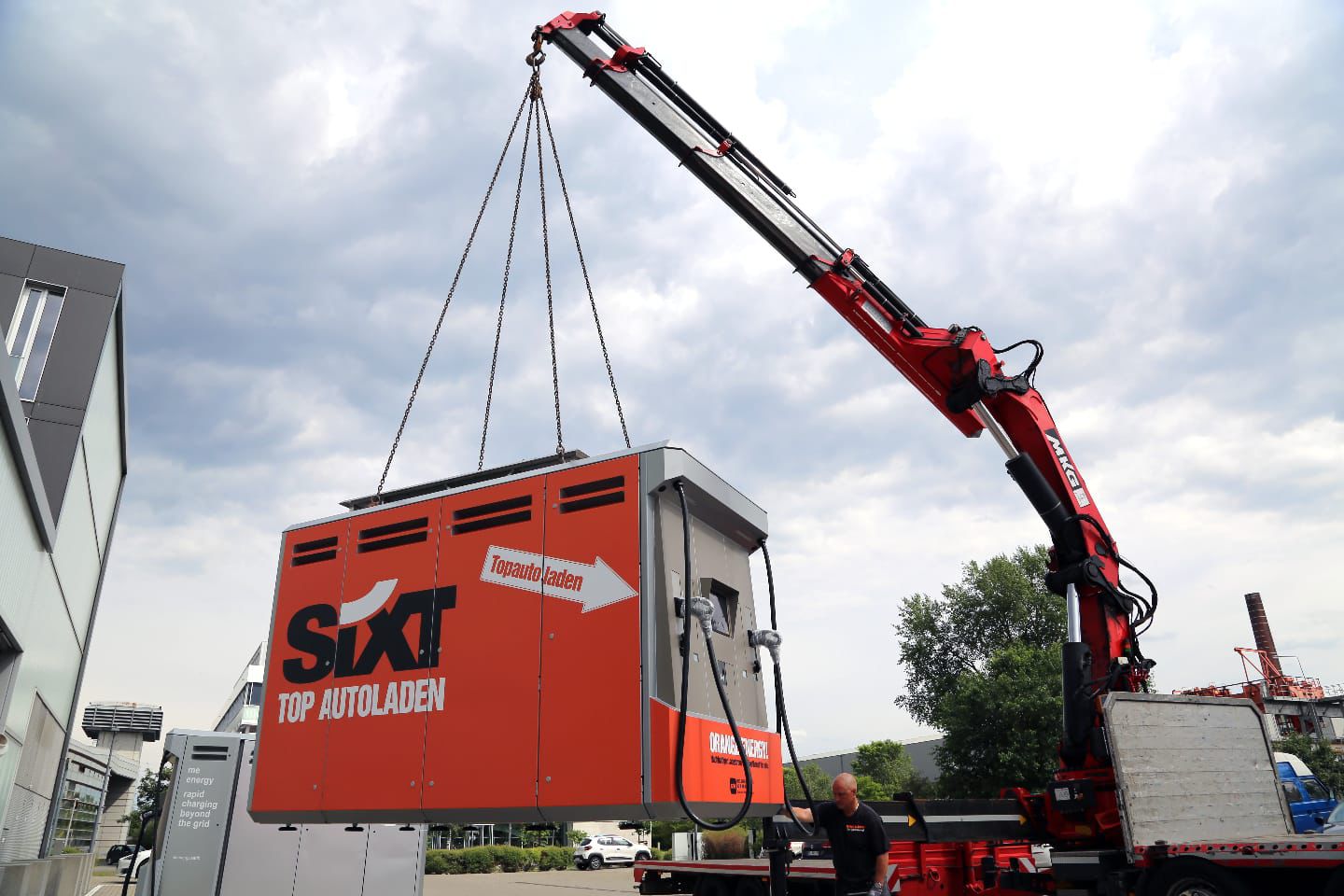
Yes. The me Energy Rapid Charger 150 is designed for flexible, relocatable deployment — it does not require fixed civil infrastructure, underground cabling, or grid connection approvals, which are typically mandatory for permanent fast-charger installations. The unit can be transported on a flatbed vehicle and commissioned at a new location within hours. This makes it highly suitable for fleet operators managing multiple depot locations, temporary project sites, highway corridors, or pilot EV charging programmes where permanent infrastructure investment is not yet justified. Trinity Cleantech provides deployment and commissioning support across Telangana and Andhra Pradesh.
CTA Section
“Is your fleet stuck waiting for a grid connection?
Talk to our EV infrastructure team — we’ll assess your depot, model the TCO, and show you how quickly you can start charging.”
Call +91 80192 38877
