

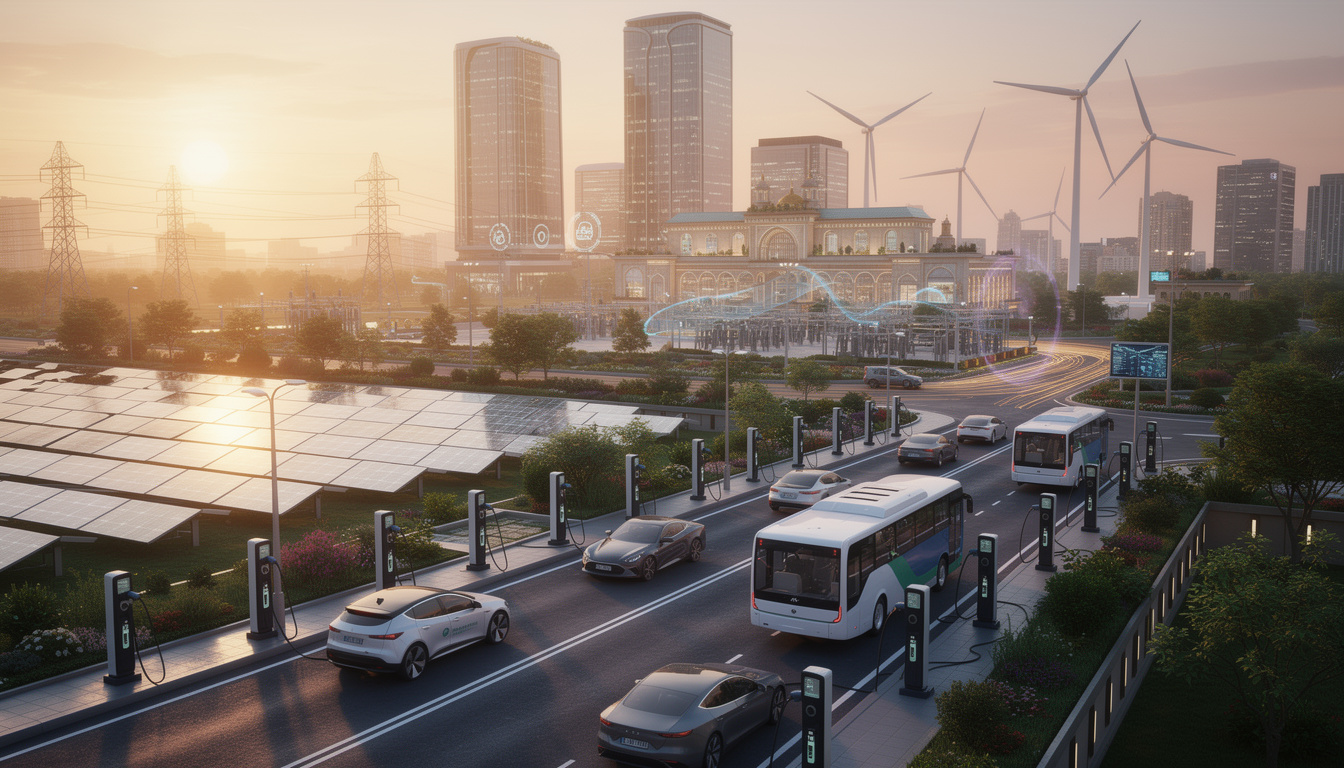
India’s clean-tech ecosystem is entering a defining phase. What began as a push for renewable adoption has now evolved into a fully integrated innovation ecosystem—connecting policy, manufacturing, startups, finance, and infrastructure.
This transformation marks a shift from early-stage growth to large-scale execution, positioning India as a global clean-tech powerhouse.
India’s Clean-Tech Growth Story So Far
Over the past decade, India has made remarkable progress in clean energy and sustainability:
- Renewable energy capacity crossing 250 GW milestone
- Rapid expansion of solar, wind, and EV ecosystems
- Strong policy backing through PLI schemes and national missions
- Rise of clean-tech startups and private investments
This momentum has helped India move beyond adoption to ecosystem-level integration.
From Adoption to Integration: The Big Shift
Earlier, clean-tech growth was largely about deploying technologies like solar panels or EVs. Today, the focus has expanded to:
- End-to-end value chains
- Domestic manufacturing capabilities
- R&D and innovation ecosystems
- Policy + finance + industry collaboration
India is now building a connected ecosystem where every stakeholder plays a role—from startups to large enterprises.
Key Pillars Driving India’s Clean-Tech Ecosystem
1. Policy & Government Support
Government initiatives are acting as strong enablers:
- Production Linked Incentives (PLI)
- National Green Hydrogen Mission
- Focus on localization and manufacturing
These policies aim to reduce import dependency and boost domestic production.
2. Manufacturing & Supply Chain Expansion
India is scaling clean-tech manufacturing across:
- Solar modules and components
- EV ecosystem (chargers, batteries, vehicles)
- Energy storage and hydrogen technologies
However, reducing reliance on imports remains critical for long-term resilience.
3. Innovation & Start-Up Ecosystem
India’s clean-tech startups are driving innovation in:
- Smart energy management
- Battery technology and storage
- AI-driven grid and charging systems
Startups are becoming key enablers of scalable clean-tech solutions.
4. Investment & Global Positioning
India is emerging as a global clean-tech investment hub:
- Strong domestic demand
- “China+1” manufacturing strategy
- Increasing global partnerships
This positions India as a strategic export and manufacturing destination.
Economic Impact of Clean-Tech Growth
Clean-tech is not just about sustainability—it’s a major economic driver:
- Potential to generate millions of jobs by 2030
- Boost to manufacturing and industrial output
- Reduced fossil fuel import dependency
- Strengthened global supply chain presence
Clean-tech is becoming a core pillar of India’s economic growth story.
Challenges That Need Attention
Despite strong progress, several challenges remain:
- High import dependency for key components
- Skill gaps in advanced technologies
- Infrastructure and financing constraints
- Slower adoption among MSMEs
Addressing these will be crucial for sustained growth.
Industry Perspective: Leadership View on 2026
As India’s clean-tech ecosystem matures, industry leaders emphasize the need for smarter infrastructure integration.
“Looking ahead to 2026, industry focus is expected to sharpen on the integration of smart charging along high-traffic transport corridors, deeper electrification of transport fleets, and the development of renewable-ready grid infrastructure.”
— Raj Kumar Medimi
This insight highlights the transition from capacity expansion to intelligent, future-ready energy ecosystems, where mobility, grid, and renewable energy converge.
Why 2025–2030 Is a Defining Decade
India is entering a critical phase where:
- Clean-tech shifts from pilot projects to large-scale deployment
- Manufacturing becomes self-reliant and export-driven
- Ecosystems become deeply interconnected
This decade will determine whether India becomes a global clean-tech leader.
The Road Ahead: Building a Global Clean-Tech Leader
To unlock its full potential, India must focus on:
- Strengthening domestic manufacturing ecosystems
- Investing in R&D and deep-tech innovation
- Creating cluster-based industrial ecosystems
- Enabling public-private collaboration
- Scaling infrastructure and financing models
A coordinated approach will ensure India not only adopts clean technologies—but leads the global transition.
Conclusion
India’s clean-tech ecosystem is no longer emerging—it is evolving into a mature, integrated, and globally competitive system.
The coming years will define how effectively the country can:
- Scale innovation
- Build self-reliance
- Lead global clean energy transformation
If executed right, India is not just participating in the clean-tech revolution—it is poised to lead it.
FAQs
1. What is clean-tech?
Clean-tech refers to technologies that reduce environmental impact, including renewable energy, EVs, battery storage, and green hydrogen.
2. Why is India focusing on clean-tech?
To reduce emissions, enhance energy security, and drive sustainable economic growth.
3. What are the key sectors in India’s clean-tech ecosystem?
Solar energy, wind power, electric vehicles, battery storage, and green hydrogen.
4. What challenges does India face in clean-tech?
Import dependency, skill gaps, infrastructure limitations, and financing barriers.
5. How will clean-tech impact India’s economy?
It will create jobs, boost manufacturing, reduce imports, and position India as a global leader.
